Is multi-orgasmic a spiritual practice?
I’ve been asked if reaching for multi-orgasmic is really a spiritual practice. When we practice reaching multi-orgasmic, like absolutely any other practice, the questions are; What is my intention? How am I doing the practice? And is it strengthening my purpose?
 Let me respond from a Tantra Yoga perspective. Through the Kaula tradition, originally from Assam in northern India, which migrated to Kashmir in northwest sometime in the 4th century, the body took center stage. The body became the very temple of devotion, our connection to the divine. This connection was brought about through vibration (spanda).
When we talk of multi-orgasmic then, we are talking about connecting through our body to energy, and even more specifically to reading and managing our vibrational for the intention to anchor ourself in the present; doing the practice as a conscious act and not as an habitual one; and for the purpose of reaching oneness.
If you can answer yes to all three of these (intention, practice and purpose) then any practice is a spiritual practice. The trick, as Daniel Odier has previously noted, is to do this when we are pure of heart, supremely joyous, and not loosing ourselves in the distraction of transient sensations.
Therefore, if you are in the mind, coming at the practice through ego and performance; or if you are not developing awareness (in the yogic sense of being the witness); or if you are grasping after the experience, then no practice is a spiritual practice.
Nevertheless, the question is often really asked due to its sexual nature. Can a sexual practice really be spiritual? This is really an ego question, often more to do with issues around guilt and shame through social conditioning. The issue is not whether a sexual act can be spiritual, but ‘how’ can any act be spiritual.
Indeed, the Kaula Upanishad, a short version of the Kaula view, really emphasises its transgressive nature when it says we should do the opposite to what societal norms dictate (but remain in consciousness). It is this remaining in consciousness that dictates whether any practice is spiritual or not.
Although what needs to be remembered is that these texts and practices where aimed at ‘advanced’ practitioners on the tantric path. As a novice, when we reach multi-orgasmic it can be overpowering and we can become frantic for more. But another point that is often forgotten is that traditionally, reaching multi-orgasmic was not a sexual practice. It was a by-product of other practices.
Traditionally, tantric practitioners and yogis of old, took either an ascetic or ecstatic route. Ascetic is usually about abstinence which can lead the practitioner to shift into ecstatic states (often through breathwork leading to and beyond multi-orgasmic), but can just as often lead them to becoming stuck. Ecstatic can incorporate a wide range of practices, including progressing through the multi-orgasmic, but for some can lead to distraction and loosing their way.
The question therefore, is never really, can a sexual practice really be spiritual? Or is multi-orgasmic spiritual? The questions are; Are you stuck in a repetitive cycle of grasping? Are you stuck in the experience? Are you stuck in ego?
When we surrender into oneness being multi-orgasmic is our natural state.
Bringing it all together
Being multi-orgasmic may be our natural state, but we have suppressed much of our creative self-expression due to societal pressures. And while it is true that the yogi has no image to defend, nothing to justify, is free of the judgements of others, this only applies to advanced practitioners who practice in full consciousness, oltherwise it’s just a highly enjoyable ego trip.
Connect on Twitter / Instagram / Facebook
Join our Community Tantra Yoga 4 men-who-love-men
See my personal development / personality profiling book DISCover the Power of You published through John Hunt Publishing Ltd, 2017. ISBN: 978-1-78535-591-2
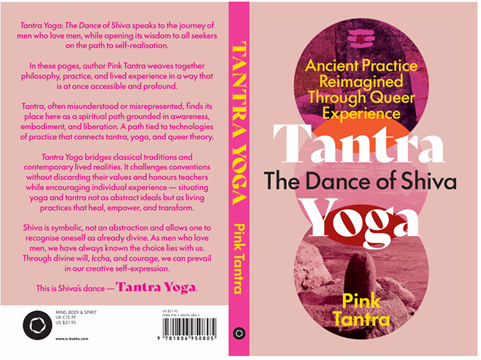
Look out for my NEW book Tantra Yoga - The Dance of Shiva, to be published through Collective Ink, late August 2026